
How do you want to shop?
What Is a Weed Vaporizer? How It Works, Types & Benefits

by Bowdega Cannabis | September 14, 2026
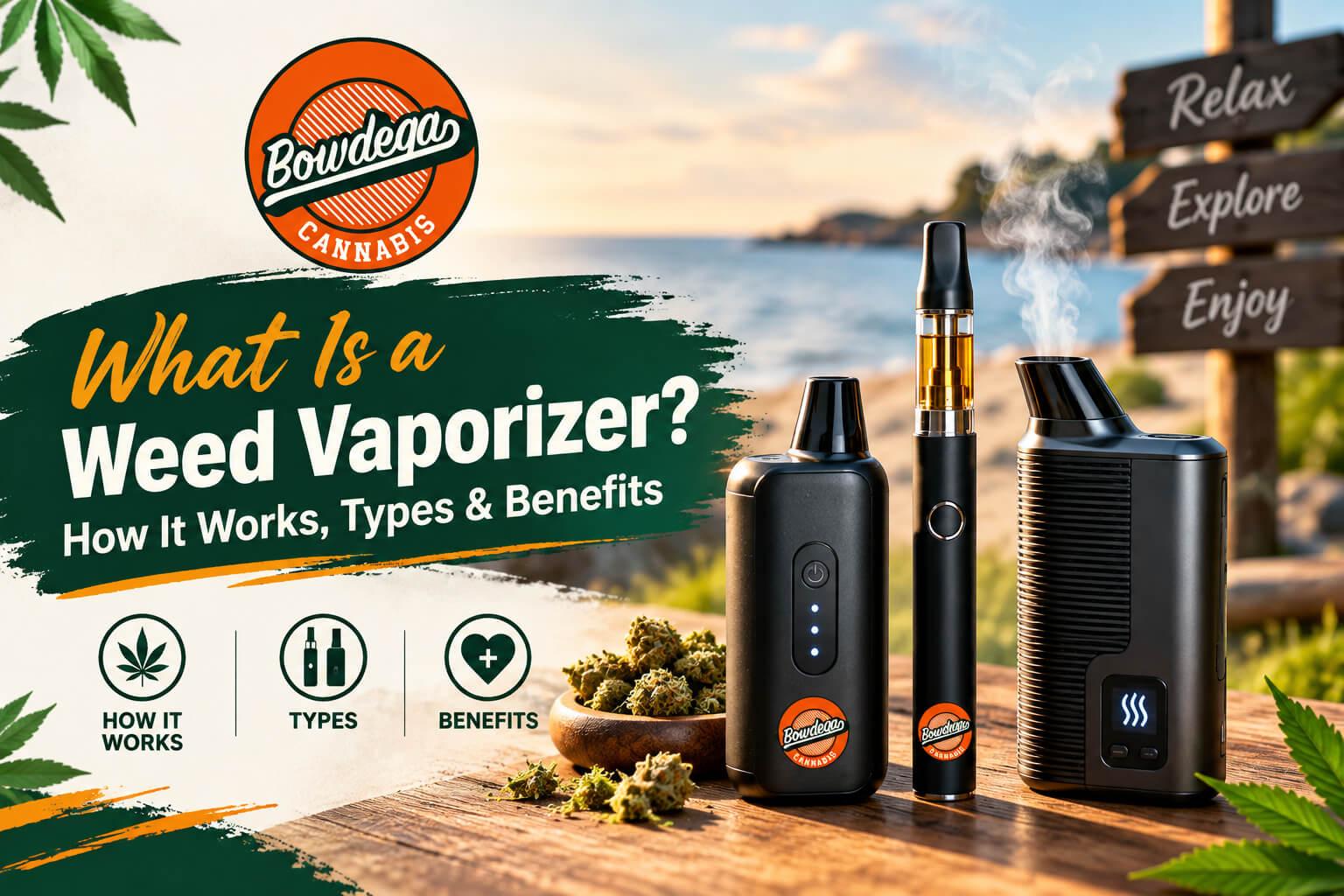
If you are new to cannabis, you may wonder, what is a weed vaporizerand why so many types are available today. A weed vaporizer is a device that uses controlled heat to release cannabis compounds for inhalation.
Depending on the model, it may work with flower, cannabis oil, or concentrates. Modern vaporizers range from simple disposable pens to advanced dry-herb and desktop systems.
This guide explains how vaporizers work, their main types, heating technology, benefits, and what to look for before choosing one.
A Simple Look at How Cannabis Vaporization Works
Cannabis vaporization is based on controlled heating rather than traditional burning. A vaporizer heats a cannabis product inside a chamber or cartridge. The heat causes compounds in the product to become available in an inhalable aerosol.
The exact process depends on the device and product. A dry-herb vaporizer heats flower, while a cartridge device heats cannabis oil. Concentrate devices are designed for thicker cannabis extracts. Therefore, the word “vaporizer” covers several different technologies.
The CDC describes vaporizers as devices that can aerosolize dry herbs, wax, and oil using non-combusting heat.
Heating Cannabis Without Traditional Combustion:
Smoking and vaporization use heat in different ways. Smoking relies on combustion, which burns the cannabis and produces smoke. Vaporization uses a heating system designed to heat the product without traditional combustion.
That difference is central to how vaporizers work. However, it does not mean vaping is risk-free. The CDC states that cannabis carries health and safety risks regardless of the method used. It also says there is not enough evidence to conclude that one cannabis-use method is always safer than another.
So, it is better to view vaporization as a different delivery method, not as a guaranteed safer alternative.
What Happens When the Device Heats Cannabis:
Cannabis contains cannabinoids, terpenes, and many other plant compounds. THC is the primary intoxicating cannabinoid, while CBD does not produce the same intoxicating effect.
When a compatible vaporizer heats cannabis, compounds are released into an aerosol. The composition of that aerosol depends on the cannabis product, temperature, device design, and heating method.
This is one reason for device quality matters. Two vaporizers may use similar cannabis products but produce different results because their heating systems are not identical.
How Does a Weed Vaporizer Work?
The basic operation of a vaporizer is easier to understand when you look at its main components. Most devices need a power source, heating system, material chamber or cartridge, airflow path, and mouthpiece.
More advanced models may include temperature sensors, digital displays, adjustable controls, and sophisticated battery systems. Simpler devices may have only one button or an automatic draw sensor.
Despite these differences, the basic process remains similar. Power activates the heating system, the heating system warms the cannabis product, and the resulting aerosol travels through the device for inhalation.
The Main Parts of a Vaporizer:
A modern cannabis vaporizer may contain several key components:
1. Battery: Supplies power to the heating system.
2. Heating element: Converts electrical energy into heat.
3. Chamber: Holds compatible dry cannabis flower.
4. Cartridge: Holds cannabis oil in cartridge-based systems.
5. Atomizer: Heats cannabis oil or concentrate in compatible devices.
6. Airflow path: Directs the aerosol toward the mouthpiece.
7. Mouthpiece: The section used for inhalation.
8. Control system: Manages temperature, power, or activation.
Not every device includes all these parts. A disposable vape may combine the battery, cartridge, atomizer, and mouthpiece into one sealed unit.
A reusable device usually separates some of these components. For example, a 510 vape battery can work with compatible cartridges, while a dry-herb vaporizer normally has its own heating chamber.
How the Heating System Produces Vapor or Aerosol:
The word “vapor” is common in the cannabis industry. Technically, many vaping devices produce an aerosol, which contains tiny particles or droplets.
The heating system determines how the cannabis product is exposed to heat. In a cartridge, the heating element warms up oil. In a dry-herb device, the chamber heats cannabis flower.
This difference matters because oil, flower, and concentrates have different physical properties. A device designed for one format may not work correctly with another.
Why Temperature Control Matters:
Temperature is one of the most important technical features in a vaporizer. It can influence vapor production, flavor, and which compounds are released.
Some devices use fixed temperature settings. Others allow users to select specific temperatures. Premium models may use sensors to maintain more consistent heating during a session.
Temperature control can also reduce the need to guess how the device is operating. However, a higher temperature is not automatically better. Excessive heat can change the flavor and may increase unwanted thermal degradation of products.
For that reason, users should stay within the manufacturer's recommended temperature range.
What Are the Main Types of Weed Vaporizers?
There is no single “best” vaporizer for everyone. The right device depends on the cannabis format, desired features, portability, and level of control.
A useful way to understand the market is to separate vaporizers by what they heat and how they are designed.
The major categories include dry-herb vaporizers, cartridge vape pens, concentrate devices, portable vaporizers, and desktop systems.
Dry Herb Vaporizers:
Dry-herb vaporizers are designed specifically for cannabis flower. The flower is placed into a heating chamber instead of being burned with a lighter.
Many premium dry-herb devices include adjustable temperatures. Some also use convection or hybrid heating systems.
This category can appeal to consumers who prefer flowers but want a device-based format. It also provides more control over the hardware and heating process than a basic disposable pen.
Vape Pens and Cartridge Vaporizers:
Vape pens are compact devices commonly used with pre-filled cannabis oil cartridges. Many cartridge systems use a 510 connection, although proprietary systems also exist.
A cartridge generally contains cannabis oil and a heating element. The battery supplies power to the heating element, which warms the oil for inhalation.
Cartridge systems are popular because they are compact and straightforward. However, shoppers should check compatibility, oil ingredients, THC concentration, and product testing before purchasing.
Concentrate and Dab Vaporizers:
Concentrate vaporizers are designed for cannabis extracts rather than loose flower. Depending on the device, they may work with products such as wax, rosin, resin, or other concentrates.
Concentrates can contain much higher cannabinoid concentrations than traditional flowers. Therefore, they require careful product selection and a compatible heating system.
A recent peer-reviewed review also emphasizes that cannabis vaporization devices and products have different risk profiles. This is another reason not to treat every vape product as identical.
Portable vs. Desktop Vaporizers:
Portable vaporizers focus on mobility. They typically use rechargeable batteries and compact designs.
Desktop vaporizers are larger and usually remain in one location. They may offer larger chambers, more precise controls, and more complex heating systems.
A simple comparison looks like this:
Feature | Portable Vaporizer | Desktop Vaporizer |
Portability | High | Low |
Battery | Usually built in | Usually external power |
Size | Compact | Larger |
Temperature control | Basic to advanced | Often advanced |
Best for | Mobility | Home use |
Setup | Usually simple | Often more involved |
Neither design is automatically superior. The better choice depends on how and where you plan to use the device.
Conduction vs. Convection: Two Common Heating Methods
Heating technology is one of the most interesting parts of modern vaporizer design.
Two major approaches are conduction and convection. Some premium devices combine both through hybrid heating.
How Conduction Heating Works
Conduction heating warms cannabis through direct contact with a heated surface.
The flower or concentrate sits against or near the heated chamber. Heat then transfers directly into the material.
Conduction systems can heat quickly and use relatively simple hardware. However, even heating can depend on chamber design and how the material sits inside the device.
How Convection Heating Works:
Convection heating uses heated air to transfer heat through the cannabis.
Instead of relying mainly on direct contact, the device moves hot air through the material. This can create a different heating pattern.
Convection technology is often associated with premium dry-herb vaporizers. However, the overall performance still depends on airflow, temperature control, chamber design, and other hardware factors.
How Hybrid Heating Combines Both:
Hybrid vaporizers combine conduction and convection.
The goal is to use direct chamber heat together with heated airflow. This can create a balance between fast heating and even heat distribution.
For shoppers, the main advantage is understanding what technology means. You do not need to become an engineer to choose a vaporizer. Knowing the heating method simply gives you a better basis for comparing premium devices.
What Can You Use in a Weed Vaporizer?
One of the most important buying questions is product compatibility.
A dry-herb vaporizer is not automatically suitable for oil. Likewise, a cartridge battery is not designed to heat loose flowers.
Always check the manufacturer's specifications before using a cannabis product in a device.
Cannabis Format | Compatible Device Type | Key Consideration |
Dry flower | Dry-herb vaporizer | Chamber and temperature |
Cannabis oil | Cartridges vape | Cartridge compatibility |
Concentrates | Concentrate vaporizer | Heating surface and material |
Multi-format products | Compatible multi-use device | Manufacturer specifications |
Cannabis Flower:
Dry cannabis flower contains cannabinoids and terpenes within the plant material.
A dry-herb vaporizer heats that flower inside a chamber. Because there is no need for a cartridge, the device interacts directly with the flower.
Premium dry-herb systems may offer better temperature stability, airflow control, chamber materials, and battery performance.
Cannabis Oil and Cartridges:
Cannabis oil is commonly packaged in pre-filled cartridges.
Cartridge oil can contain different cannabinoid and terpene profiles. Some products use distillate, while others focus on more complex extract profiles.
For a premium shopping experience, look beyond THC percentage alone. Consider the extraction type, cannabinoid profile, terpene information, ingredients, testing, and package information.
Cannabis Concentrates:
Concentrates are highly refined cannabis products. They can contain substantial levels of cannabinoids.
Examples include rosin, resin, wax, and other extract formats. Different concentrates have different textures and compositions.
Because concentrate products can be highly potent, beginners should pay particular attention to labeling and product information.
What Are the Benefits of Using a Weed Vaporizer?
Vaporizers offer several practical benefits. These benefits are mainly related to convenience, device choice, portability, and control.
However, responsible content should separate practical advantages from health claims. The CDC says there are health risks with all cannabis-use methods and that evidence is not strong enough to declare one method universally safer.
Convenience and Portability:
1. Many vaporizers are designed around convenience.
2. A cartridge pen can fit into a small bag or pocket. Portable dry-herb devices can provide similar mobility while using flowers.
3. This makes vaporizers attractive to people who want a compact cannabis device.
Temperature-Control Options:
Temperature control is one of the biggest advantages of more advanced devices.
Instead of relying on a fixed heating level, users can choose from several settings. Premium models may use electronic temperature regulation to maintain a more consistent heating environment.
This level of control can make the experience more predictable. It can also help users explore different temperature ranges without changing the entire device.
Less Preparation Than Traditional Flower Smoking:
A vaporizer can remove some of the preparation associated with traditional smoking.
For example, a cartridge does not require grinding flowers or rolling papers. A dry-herb vaporizer also removes the need to roll a joint.
This convenience is one reason vaporizers have become an important category within the cannabis market.
Weed Vaporizer vs. Smoking Cannabis: What Is the Difference?
Vaporizing and smoking may involve the same cannabis plant, but the delivery process is different.
Smoking uses combustion. Vaporization relies on controlled heating. That technical distinction affects how the cannabis material is processed.
Combustion vs. Vaporization:
Combustion burns cannabis and produces smoke. Vaporization uses heat to release compounds without relying on traditional burning.
This can change the chemical composition of what is inhaled. However, it does not eliminate all potential risks.
A 2024 review found that vaporization may reduce some respiratory risks linked with cannabis combustion. At the same time, it emphasized that different vaporization products and devices do not carry identical safety profiles.
Equipment and Preparation:
Smoking flowers may involve papers, grinders, pipes, or other accessories.
Many vaporizers combine several functions into a single device. Cartridge systems can be particularly simple because the oil is already contained in the cartridge.
Dry-herb devices require more preparation than cartridge pens but still remove the need for rolling.
Portability and Discretion:
Portable vaporizers are generally designed for mobility.
Cartridge pens are especially compact. They also typically produce less lingering odor than traditional cannabis smoke.
Still, vapor does not mean completely odorless. Environmental rules and local laws should always be considered.
Health Considerations to Know:
The CDC says THC can affect memory, attention, decision-making, and coordination. It also notes that vaping has been linked to lung injury, and that oils and concentrates may contain highly concentrated THC or additives.
Therefore, consumers should focus on regulated products, clear labeling, and responsible use. A vaporizer should never be presented as a risk-free cannabis option.
How to Choose the Right Weed Vaporizer
A premium vaporizer is not necessarily the device with the highest price.
The better approach is to compare the features that match your cannabis product and lifestyle.
Consider Portability and Battery Life:
1. Think about where you expect to use the device.
2. If portability matters most, look for a compact rechargeable model. If you mainly use the device at home, size may matter less.
3. Battery capacity also deserves attention. A compact device with a small battery may need more frequent charging.
Look at Temperature Controls:
1. Temperature control can separate basic devices from more advanced models.
2. Look for clear settings, reliable temperature regulation, and controls that are easy to understand.
3. A premium device should offer useful control rather than simply adding complicated features.
Check Heating Technology:
If flavor and consistent heating matter to you, examine the heating system.
Conduction, convection, and hybrid systems each have different designs. Also look at chamber construction, airflow, and temperature stability.
These details can tell you more about a device than appearance alone.
Review Product Quality and Testing:
Device quality is only part of the equation. The cannabis product also matters.
For regulated products, review the package information carefully. Look for cannabinoid content, ingredients, batch information, and available testing details.
This is especially important with oils and concentrates because their composition can vary significantly.
What Should Beginners Know Before Using a Weed Vaporizer?
A sophisticated device does not replace basic product knowledge.
Before using a vaporizer, understand what it is designed to heat. Then read the product label and manufacturer's instructions.
Beginners should also pay attention to THC concentration. Higher THC products can produce stronger intoxicating effects, and individual responses vary. The CDC recommends understanding these factors rather than assuming that every cannabis product will affect people in the same way.
How to Keep a Cannabis Vaporizer Clean and Working Properly
Good maintenance can protect both performance and the lifespan of a reusable device.
Start with the manufacturer's cleaning instructions. Different devices use different materials and components, so one cleaning method does not fit every model.
Pay attention to the mouthpiece, chamber, airflow path, and other areas where residue can build up. Keep rechargeable devices dry and use the recommended charging equipment.
You should also inspect the device regularly. If a battery becomes damaged, swollen, unusually hot, or otherwise abnormal, stop using it and follow the manufacturer's safety instructions.
Premium Features Worth Looking for in a Weed Vaporizer
If you are comparing higher-end vaporizers, look beyond appearance.
Premium hardware often focuses on temperature stability, build quality, airflow, battery performance, materials, and user controls.
Here are useful features to compare:
1. Precise temperature control
2. Stable heat regulation
3. Fast heat-up time
4. Quality heating chamber
5. Efficient airflow
6. Replaceable or serviceable components
7. Reliable battery performance
8. Clear digital controls
9. Easy cleaning
10. Durable construction
11. Product compatibility
12. Manufacturer support
A premium device should solve a real problem. More buttons do not automatically mean better performance.
Common Questions About Weed Vaporizers
Is a weed vaporizer the same as a vape pen?
Answer: No. A vape pen is one type of cannabis vaporizer. Many vape pens use cannabis oil cartridges, while other vaporizers are designed for flower or concentrates.
Can you vape dry cannabis flower?
Answer: Yes, but you need a vaporizer specifically designed for dry herb. A standard cartridge battery is not designed to heat loose flowers.
Can all vaporizers use concentrates?
Answer: No. Concentrates require a compatible vaporizer. Always check the manufacturer's specifications before using concentrates.
What is the difference between a dry herb vaporizer and a cartridge vape?
Answer: A dry-herb vaporizer heats cannabis flower inside a chamber. A cartridge vape heats cannabis oil inside a compatible cartridge.
Are portable vaporizers better than desktop vaporizers?
Answer: Neither is automatically better. Portable models prioritize mobility. Desktop models may provide larger chambers and more advanced controls.
Does a vaporizer burn cannabis?
Answer: A vaporizer is designed to heat cannabis without traditional combustion. However, temperature, device design, and product type can affect the heating process.


