
What Are Cannabis Topicals? A Complete Beginner's Guide

by Bowdega Cannabis | October 14, 2026
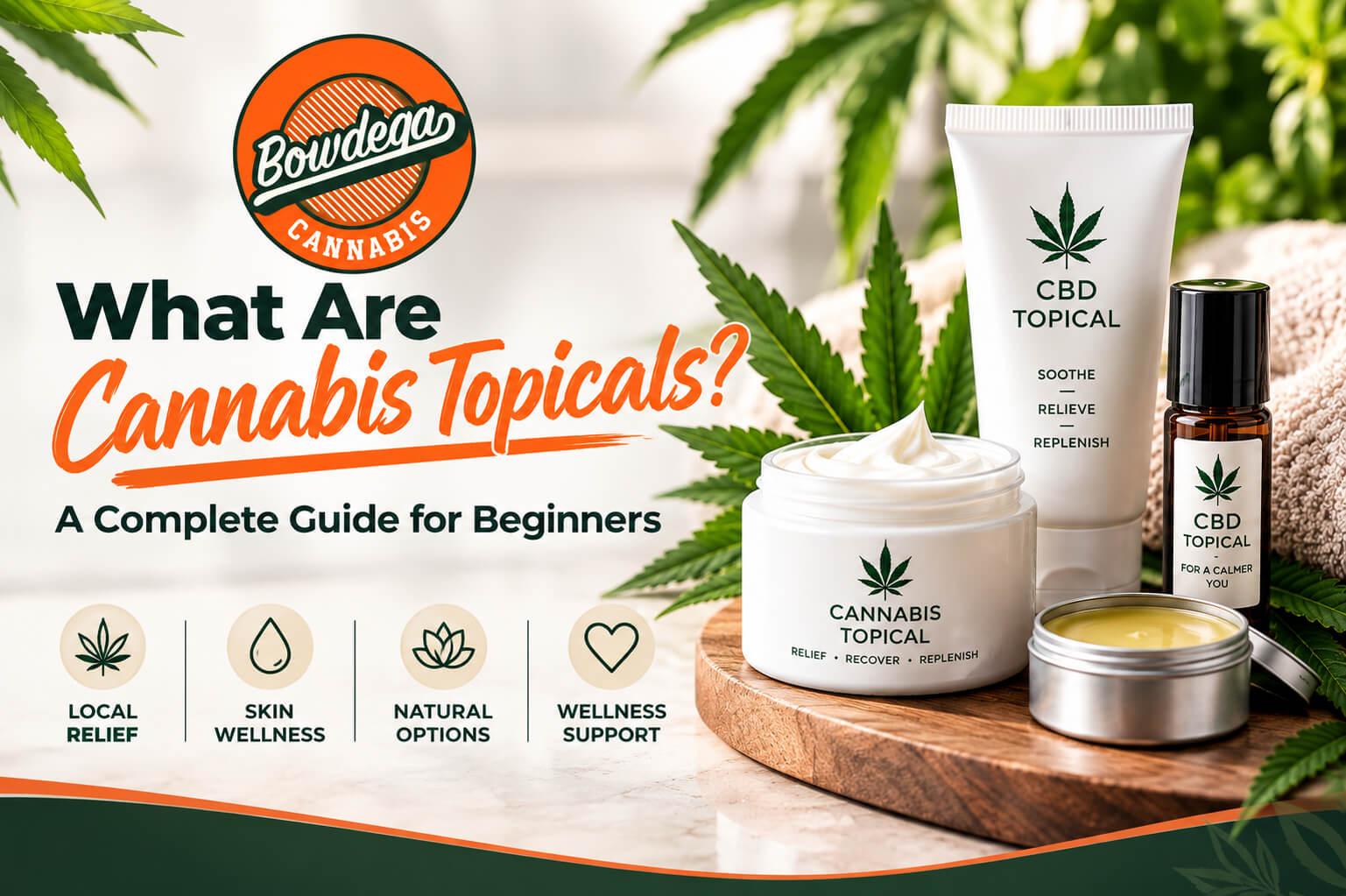
Cannabis topicals offer a different way to explore cannabis without smoking or vaping. These products include creams, lotions, balms, and oils designed for application to the skin.
However, their ingredients, effects, and safety considerations can vary. Understanding these differences helps beginners make informed choices. This guide explains how cannabis topicals work, their common types, potential benefits, and safe application practices.
Understanding Cannabis Topicals and Their Purpose
Cannabis topicals are products designed for direct application to the skin. They may contain cannabinoids such as cannabidiol (CBD) or tetrahydrocannabinol (THC). Manufacturers often combine these compounds with oils, moisturizers, waxes, and other ingredients. The final formula determines the product's texture, intended use, and application instructions.
Unlike inhaled cannabis, topicals do not require smoking or vaping. They also differ from edibles, which people consume and digest. Most traditional topicals target the skin's surface or nearby tissues.
Transdermal products, however, aim to deliver active compounds through the skin and into the bloodstream.
People explore these products for different reasons. Some prefer creams for their familiar skincare texture, while others choose balms for localized applications.
Nevertheless, a product's intended use does not prove that it treats a medical condition. Therefore, beginners should understand both the available options and the limits of current research.
Different Types of Cannabis Topicals
Cannabis topicals come in several forms, so beginners have plenty of options to explore. Each format offers a different texture, application method, and combination of ingredients. However, the product type alone does not determine its strength or effects. Always check the label before choosing a product.
Cannabis Creams and Lotions:
Cannabis-infused creams and lotions spread across the skin with little effort. Creams often have a thicker texture, while lotions tend to feel lighter. Manufacturers may combine cannabinoids with moisturizing ingredients and skin conditioners. Therefore, check the full ingredient list if you have sensitive skin.
Cannabis Balms and Salves:
Balms and salves usually have a thicker, waxier texture than lotions. Their formulas may contain plant oils, waxes, and other ingredients that help create a protective layer on the skin.
A CBD-infused balm is one example of this product type. Still, the name does not guarantee a specific cannabinoid concentration or result.
Cannabis-Infused Oils and Roll-Ons:
Some cannabis topical products come as oils or roll-on formulas. Oils may suit massage or targeted application when the label permits it.
Roll-ons can make application easier and reduce direct contact with the product. However, users should follow the specific directions and avoid applying products to unsuitable areas.
Transdermal Cannabis Patches:
Transdermal patches differ from ordinary creams and balms. They aim to move active ingredients through the skin and into the bloodstream.
As a result, their delivery method and potential effects can differ from standard topicals. Use a patch only as directed by its manufacturer.
THC vs. CBD Topicals: What's the Difference?
THC and CBD are two well-known compounds found in cannabis. THC can produce intoxicating effects, while CBD does not typically produce the same high.
However, their presence in a topical product does not tell the whole story. The formula, concentration, delivery method, and other ingredients also matter.
What Are THC Topicals?
THC topicals containtetrahydrocannabinol; a cannabinoid associated with the intoxicating effects of cannabis. A THC-infused lotion may also include moisturizing ingredients and other plant extracts.
However, an ordinary skin-applied formula differs from a product designed for transdermal delivery. Therefore, do not assume every THC topical has the same effects.
What Are CBD Topicals?
CBD topicals contain cannabidiol, a cannabinoid that does not typically cause a THC-like high. These products may include cream, balms, lotions, and oils. Some people explore them as part of their personal skincare routine.
Nevertheless, research has not established the effectiveness of every CBD topical for specific health conditions.
The U.S. Food and Drug Administration also warns that many CBD products have not undergone approval for treating particular diseases. Product quality and ingredient accuracy can vary. Therefore, buyers should avoid relying on broad health promises alone.
How Do THC and CBD Topicals Differ?
The key difference lies in the cannabinoid included and its potential effects. However, the product delivery system also plays an important role. Use this table as a starting point when comparing labels.
| Feature | THC topicals | CBD topicals |
|---|---|---|
| Main cannabinoid | Tetrahydrocannabinol | Cannabidiol |
| Intoxicating potential | Depends on formulation and delivery | Does not typically cause a THC-like high |
| Common formats | Creams, balms, lotions | Creams, balms, lotions |
| What to check | THC content and delivery method | CBD content and other ingredients |
| Main consideration | Potential intoxicating effects and local laws | Product quality, safety, and evidence limits |
What Are the Potential Benefits of Cannabis Topicals?
People explore cannabis topicals for different personal-care and localized application needs. Some products combine cannabinoids with familiar skincare ingredients. Others are designed for massage or targeted use. However, these intended uses should not be confused with proven medical benefits.
Localized Application and Intended Uses:
Traditional topicals are applied directly to a selected area of skin. Their formulation may keep the product primarily near the application site.
However, the degree of absorption depends on several factors. These include the ingredients, cannabinoid properties, skin condition, and product design.
Some people explore topical products as part of their personal comfort routines. Still, research does not support treating every topical as an established remedy.
For example, a product's marketing description cannot confirm that it relieves pain or inflammation. Consult a healthcare professional for persistent or concerning symptoms.
Cannabis-Infused Skincare Products:
Cannabis skincare products may contain CBD or other cannabis-derived ingredients. Manufacturers often combine them with familiar cosmetic ingredients, such as plant oils and moisturizers.
The overall formula determines the product's texture and skincare characteristics. Therefore, consider the complete ingredient list instead of focusing only on the cannabis extract.
What Does Research Say About Their Benefits?
Research into topical cannabinoids continues to develop. A 2021 review in the Journal of Clinical and Aesthetic Dermatology examined the safety and sourcing of topical cannabinoids.
The authors concluded that important questions remain about product safety, effectiveness, absorption, and formulation. They also noted that results may need evaluation on a product-by-product basis.
These finding matters when comparing products. Evidence of one formulation does not automatically apply to another. Moreover, early research does not prove that a consumer product treats a medical condition. For now, readers should approach strong health claims with caution.
How to Use Cannabis Topicals Safely
Safe cannabis topical application starts with reading the label. Different formulas may have different instructions and restrictions. Furthermore, ingredients that suit one person may irritate another person's skin. Follow these practical steps before trying a new product.
1. Read the instructions: Check the intended use, ingredients, cannabinoid content, and application directions.
2. Check your skin: Avoid applying a product to broken or irritated skin unless its directions specifically allow it.
3. Start cautiously: If appropriate for the product, test a small area first and watch for irritation.
4. Apply as directed: Use the amount and frequency listed by the manufacturer.
5. Keep it away from sensitive areas: Avoid eyes and mucous membranes unless the product is specifically designed for that use.
6. Wash your hands: Clean your hands after application unless the product instructions say otherwise.
7. Store it properly: Keep the container closed and follow the storage instructions.
Apply the Product as Directed:
Do not assume that using more product will produce better results. Cannabis topical dosage instructions vary by formula and concentration. Some products provide a measured amount, while others give general application directions.
Follow the label instead of inventing a dose or applying the product more often than recommended.
Avoid Common Application Mistakes:
Avoid combining several topical products on the same area without checking their ingredients. Certain combinations may irritate the skin.
Also, never swallow a topical product unless it is specifically formulated and labeled for oral use. If irritation develops, stop using the product and seek medical advice if symptoms are severe or persistent.
How Long Do Cannabis Topicals Take to Work?
Cannabis topical onset time varies by product and formulation. There is no single timeline that applies to every cream, balm, or patch. The amount applied and the condition of the skin may also affect absorption. Therefore, avoid relying on a universal time estimate when choosing or using these products.
Factors That May Affect Onset Time:
Several factors may influence how a topical behaves after application, These include:
1. Formulation: Creams, balms, oils, and patches have different ingredients and delivery methods.
2. Cannabinoid concentration: The amount of CBD or THC can vary between products.
3. Skin condition: The skin's condition can influence how certain ingredients penetrate.
4. Application method: The amount used and the application area may affect product performance.
5. Product design: Ordinary topicals and transdermal products serve different purposes.
Most importantly, do not keep applying for more products simply because you notice no immediate effect. Follow the manufacturer's directions and allow the product to be used as instructed.
Topicals vs. Transdermal Patches:
Traditional topicals generally target the skin or nearby tissues. Transdermal patches aim to deliver active ingredients through the skin into the bloodstream.
Consequently, their onset, duration, and potential effects may differ. Always check the product label to understand which type you have.
Possible Side Effects and Safety Considerations
Cannabis product safety deserves attention, even when a product is applied to the skin. Topicals may contain cannabinoids, fragrances, essential oils, preservatives, and other ingredients.
Any of these ingredients may cause an unwanted reaction to some users. Furthermore, research into the safety of topical cannabinoids remains limited.
Skin Irritation and Allergic Reactions:
Some people may experience redness, itching, burning, or a rash after applying a topical product. Fragrances and other ingredients may contribute to skin reactions.
Therefore, check the ingredients before using them, especially if you have known sensitivities. Stop using the product if irritation develops, and seek medical advice when symptoms are severe or persistent.
THC, CBD, and Potential Risks:
Do not assume that a product is risk-free because it contains CBD. The FDA notes that CBD products can have safety concerns, including possible drug interactions.
However, evidence about the risks of a specific skin-applied product may differ from evidence about oral CBD. Ask a healthcare professional about potential interactions if you use medications or have health concerns.
Also, do not assume that every THC topical is incapable of causing intoxication. Ordinary topicals differ from transdermal products, which are designed for delivery through the skin.
Check the product's formulation and warnings. Follow local cannabis laws and never use a product in a way its label does not permit.
The FDA strongly advises against using THC, CBD, or other cannabis products during pregnancy or breastfeeding.
Safe Storage Around Children and Pets:
Keep cannabis topicals in their original, closed containers. Store them away from children and pets, preferably in a secure location. Do not leave an open container near food, toiletries, or shared household items.
Finally, follow the label's temperature and storage instructions to help maintain product quality.
What to Look for When Choosing Cannabis Topicals
Choosing a topical product requires more than picking a cream or balm. You should understand its ingredients, cannabinoid content, intended use, and available quality information.
A clear label helps you compare products more confidently. However, no single label feature guarantees that a product will deliver a particular result.
Check Cannabinoid Content and Ingredients:
Start by reviewing the amount of THC or CBD listed on the package. Check whether the amount refers to the entire container or a specific serving, when that information is available.
Then, review the other ingredients for potential irritants or allergens. This step is especially important when choosing cannabis-infused creams or CBD-infused balms for personal care.
Review Product Quality and Testing Information:
Look for clear manufacturer details and relevant testing documentation. Where available, a certificate of analysis can provide information about cannabinoid content and tested contaminants.
Make sure the report matches the specific product and batch. Also, remember that testing information does not prove a product's medical effectiveness.
Choose a Product Format That Fits Your Needs:
Think about the texture and application method you prefer. Creams and lotions may feel familiar, while balms tend to be thicker. Roll-ons may offer convenient application, depending on their design.
Compare the directions, ingredients, and intended use before deciding which format suits your preferences.
Use this quick checklist when comparing options:
1. Check THC and CBD content.
2. Read the complete ingredients list.
3. Review application directions and warnings.
4. Look for relevant product testing information.
5. Confirm that the product complies with local laws.
6. Consider any personal sensitivities or health concerns.
Cannabis Topicals vs. Edibles, Oils, and Other Products
Cannabis products use different delivery methods, so their effects and risks can vary. Topicals are applied to the skin, while edibles are eaten and processed through digestion.
Inhaled products deliver cannabinoids through the lungs. Meanwhile, transdermal patches aim to deliver active compounds through the skin into the bloodstream.
Cannabis Topicals vs. Edibles:
Edibles enter the digestive system, so their effects differ from those of traditional skin-applied products. They may also take longer to produce noticeable effects than inhaled cannabis.
Topicals, by contrast, are generally intended for application to a particular skin area. However, transdermal products may produce different effects from ordinary creams and balms.
Cannabis Topicals vs. Inhaled Cannabis:
Inhaled cannabis delivers cannabinoids through the lungs. Traditional topicals avoid inhalation because users apply them directly to the skin. Nevertheless, the absence of smoking does not mean every topical product is automatically safe. Ingredients, cannabinoid content, and the delivery method still matter.
Cannabis Topicals vs. CBD Oils:
CBD oils may be formulated for oral use or external application. These products are not interchangeable, even when they contain the same cannabinoid.
Check the label to confirm the intended route of use. Never swallow a product intended only for external application.
Frequently Asked Questions About Cannabis Topicals
Do Cannabis Topicals Get You High?
Answer: Traditional topicals are generally designed for localized application and do not usually produce the typical high associated with THC. However, transdermal products differ because they aim to deliver active compounds into the bloodstream. Check the formulation and product warnings rather than assuming all products work the same way.
Can You Use Cannabis Topicals Every Day?
Answer: Daily use depends on the specific product and its instructions. Research has not established one universal schedule for every topical formulation. Follow the manufacturer's directions and avoid applying the product more often than recommended. Ask a healthcare professional if you have concerns about regular use.
Can Cannabis Topicals Cause Skin Irritation?
Answer: Yes, some topical products can cause redness, itching, or other skin reactions. Ingredients such as fragrances or essential oils may irritate sensitive skin. Review the ingredient list and consider testing a small area when appropriate. Stop use if irritation develops.
Are THC Topicals and CBD Topicals the Same?
Answer: No. THC topicals contain tetrahydrocannabinol, while CBD topicals contain cannabidiol. Their potential effects and product formulations can differ. Some products contain both cannabinoids, so check the label for exact details.
Can Cannabis Topicals Be Used on Sensitive Skin?
Answer: That depends on the product's ingredients and your skin's sensitivities. Fragrances, essential oils, and other ingredients may trigger reactions. Review the label carefully and consult a dermatologist if you have a skin condition or repeated reactions. Do not apply a product to damaged skin unless its instructions specifically allow it.
How Should Cannabis Topicals Be Stored?
Store topicals in their original, closed containers and follow the manufacturer's instructions. Keep them away from direct sunlight, excessive heat, children, and pets. Also, avoid transferring products into unmarked containers. Proper storage helps protect product quality and reduces accidental exposure.
Final Thoughts on Understanding Cannabis Topicals
Cannabis topicals come in several forms, including creams, lotions, balms, oils, and transdermal patches. Each format has different ingredients, application methods, and potential effects.
Therefore, understanding the label is an important first step for beginners. Research into topical cannabinoids continues, so avoid assuming every product provides the same benefits.
If you're exploring available options, Bowdega Cannabis offers a dedicated Topicals category where you can review relevant products. Compare ingredients, cannabinoid content, and directions before making a choice.
Most importantly, make informed decisions based on reliable information rather than unsupported health claims.


